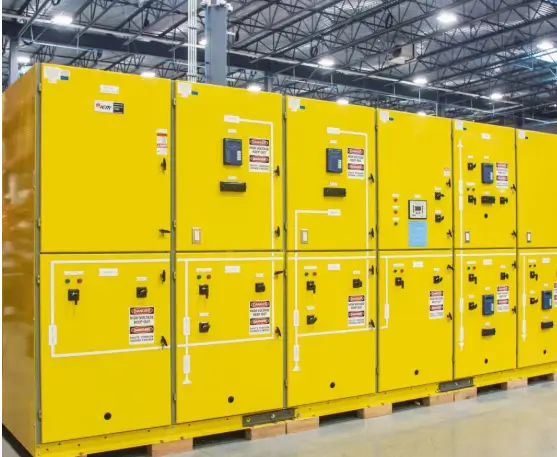
Modern electrical networks rely on robust systems to manage, distribute, and protect power. At the center of these systems is medium voltage switchgear, a critical assembly designed to operate typically between 1 kV and 52 kV. Whether used in industrial plants, commercial facilities, or utility networks, switchgear ensures that electricity flows safely and efficiently while minimizing risks associated with electrical faults.
To fully understand how these systems function, it’s essential to explore the key components that make up switch gear products. Each component plays a specific role, and together they form an integrated system that protects equipment, maintains stability, and ensures uninterrupted power supply.
What Is Medium Voltage Switchgear?
Medium voltage switchgear is an assembly of electrical devices used to control, protect, and isolate electrical circuits. It acts as a central hub within a power distribution system, enabling operators to manage electricity flow and respond to faults quickly.
These systems are designed to:
- Interrupt fault currents
- Monitor electrical conditions
- Isolate sections for maintenance
- Ensure safe operation
The effectiveness of switchgear depends on how well its components work together. Understanding these components is key to appreciating the value of modern switch gear products.
Why Components Matter in Switchgear Systems
Each part of a switchgear system is engineered to perform a specific function. When combined, these components create a coordinated system capable of detecting faults, isolating issues, and maintaining power continuity.
Without properly functioning components:
- Electrical faults could spread across the system
- Equipment damage would increase
- Safety risks would rise significantly
This is why high-quality medium voltage switchgear relies on advanced and reliable components designed to work seamlessly together.
Circuit Breakers: The First Line of Defense
Circuit breakers are one of the most important components in switch gear products. Their primary role is to interrupt the flow of electricity when a fault occurs.
How Circuit Breakers Work
Circuit breakers continuously monitor the flow of current in a circuit. When they detect abnormal conditions such as:
- Short circuits
- Overloads
- Equipment failures
They automatically open the circuit, stopping the flow of electricity and preventing damage.
Types of Circuit Breakers
In medium voltage switchgear, different types of circuit breakers are used, including:
- Vacuum circuit breakers
- Gas-insulated circuit breakers
- Air circuit breakers
Each type is designed for specific applications, but all serve the same fundamental purpose: protecting the system from faults.
Protective Relays: The Brain of the System
While circuit breakers act on faults, protective relays are responsible for detecting them. They are often referred to as the “brain” of medium voltage switchgear.
Role of Relays
Protective relays monitor electrical parameters such as:
- Current
- Voltage
- Frequency
- Power flow
When these parameters exceed safe limits, the relay sends a signal to the circuit breaker to trip and isolate the faulty section.
Types of Relays
Modern switch gear products use digital relays that offer advanced features such as:
- Real-time monitoring
- Fault analysis
- Remote communication
These smart relays improve system reliability and enable faster response to issues.
Busbars: The Power Distribution Backbone
Busbars are conductive components that distribute electricity within the switchgear system. They act as a central connection point for incoming and outgoing circuits.
Function of Busbars
Busbars carry large amounts of current and ensure efficient power distribution across the system. They connect:
- Incoming power supply
- Circuit breakers
- Outgoing feeders
Design Considerations
Busbars in medium voltage switchgear are designed to:
- Handle high current loads
- Minimize energy losses
- Maintain structural integrity under fault conditions
Their design plays a crucial role in the overall performance of switch gear products.
Transformers: Measuring and Monitoring Power
Transformers are essential components that support measurement and protection within switchgear systems. They do not directly control power flow but provide critical data for monitoring and control.
Types of Transformers
Two main types of transformers are used in medium voltage switchgear:
Current Transformers (CTs)
These measure the current flowing through the system and provide scaled-down values for relays and meters.
Voltage Transformers (VTs)
These measure voltage levels and supply accurate data for monitoring and protection devices.
Importance of Transformers
Transformers ensure that protective relays receive precise information, enabling them to detect faults accurately. Without them, the effectiveness of switch gear products would be significantly reduced.
Disconnect Switches: Ensuring Safe Isolation
Disconnect switches, also known as isolators, are used to de-energize specific parts of the system for maintenance or repair.
Key Functions
- Provide visible isolation of circuits
- Ensure safety during maintenance
- Prevent accidental energization
Unlike circuit breakers, disconnect switches are not designed to interrupt load current. They are used only when the circuit is already de-energized.
See also: The Role of Generative AI Services in Driving Smarter Business Decisions
Protective Enclosures: Enhancing Safety and Durability
The enclosure is a critical part of medium voltage switchgear, housing all internal components within a protective structure.
Benefits of Enclosures
- Protect components from dust, moisture, and contaminants
- Prevent accidental contact with live parts
- Contain arcs during faults
Modern switch gear products often feature metal-enclosed or gas-insulated designs for improved safety and reliability.
How These Components Work Together
The true strength of medium voltage switchgear lies in how its components interact as a unified system.
Step-by-Step Operation
- Normal Operation
Electricity flows through busbars and circuit breakers to supply power to connected loads. - Monitoring
Transformers measure current and voltage, sending data to protective relays. - Fault Detection
If abnormal conditions are detected, relays analyze the data and determine whether a fault has occurred. - Fault Isolation
The relay sends a signal to the circuit breaker, which trips and interrupts the current. - System Protection
The faulty section is isolated, preventing damage to other parts of the system. - Maintenance and Restoration
Disconnect switches allow safe access for repairs, and the system is restored once the issue is resolved.
This coordinated process ensures that switch gear products provide reliable protection and maintain system stability.
Importance in Industrial and Utility Applications
The components of medium voltage switchgear are essential for various applications, including:
Industrial Facilities
Factories and processing plants rely on switchgear to protect machinery and maintain continuous operations.
Power Distribution Networks
Utilities use switchgear to manage electricity flow and ensure reliable supply to consumers.
Commercial Infrastructure
Buildings such as hospitals and data centers depend on switchgear for uninterrupted power.
In all these applications, the proper functioning of each component is critical to overall system performance.
Advancements in Switchgear Components
Technology continues to improve the performance and capabilities of switch gear products.
Digitalization
Modern systems use smart relays and sensors for real-time monitoring and control.
Compact Designs
Advancements in insulation and materials have led to more compact switchgear systems.
Enhanced Safety Features
Arc-resistant designs and improved enclosures provide better protection for personnel and equipment.
Common Challenges and Maintenance Considerations
While medium voltage switchgear is designed for reliability, regular maintenance is essential to ensure optimal performance.
Common Challenges
- Component wear and tear
- Environmental exposure
- Electrical stress
Maintenance Practices
- Routine inspections
- Testing of relays and circuit breakers
- Cleaning and environmental control
Proper maintenance ensures that all components continue to function effectively and extend the lifespan of the system.
Conclusion
Understanding the key components of medium voltage switchgear is essential for anyone involved in power systems. From circuit breakers and relays to busbars and transformers, each element plays a vital role in ensuring safe and efficient operation.
These components work together as an integrated system to detect faults, isolate problems, and maintain power continuity. High-quality switch gear products are designed to deliver reliability, safety, and performance across a wide range of applications.
As electrical systems continue to evolve, the importance of advanced switchgear components will only grow. By investing in well-designed and properly maintained systems, industries and utilities can ensure stable, efficient, and secure power distribution for years to come.